







How Can Factories Generate Their Own Electricity and Heat? INNIO Jenbacher at SEE ENERGY 2026
Gas engines, combined heat and power (CHP), large-scale heat pumps and gas turbines are becoming increasingly important for industrial companies seeking greater energy security and better control over operating costs. How can manufacturers identify the right combination of technologies, and when does on-site energy generation make economic sense? These questions will be explored by INNIO Group, the company behind Jenbacher gas engines, at SEE ENERGY 2026 – ENERGY FOR INDUSTRY, taking place on 4–5 November in Novi Sad, Serbia.
When Factories Become Energy Producers
For industrial companies, energy is no longer simply an operating expense. Electricity and gas prices, supply reliability and the need to reduce emissions increasingly influence competitiveness, production planning and long-term investment decisions.
As a result, manufacturers are exploring solutions that enable them to generate electricity and heat directly at their facilities or use available energy resources more efficiently.
These technologies include gas engines, gas turbines, combined heat and power (CHP) systems, large-scale industrial heat pumps and waste heat recovery solutions.
Each technology serves a different purpose.
Gas engines and turbines provide dispatchable electricity generation, often combined with useful heat production. Large-scale heat pumps enable the electrification of certain industrial heating processes, while waste heat recovery systems reduce the need for additional energy generation.
The key question for industry is therefore not which technology is best in isolation, but which combination delivers the greatest value for a specific industrial facility.
INNIO Jenbacher – Decentralized Energy Solutions for Industry
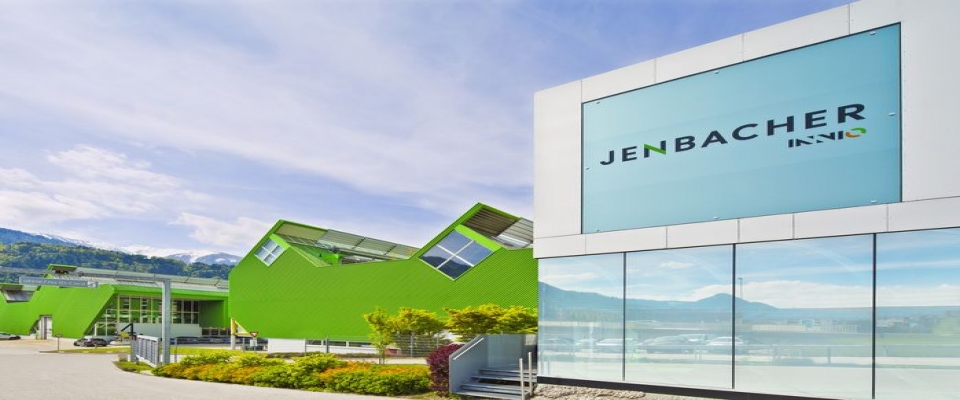
INNIO Group is a global provider of decentralized energy solutions, headquartered in Munich, Germany, with more than 5,000 employees and a presence in approximately 100 countries.
The company designs, manufactures and services high-performance energy systems under its Jenbacher and Waukesha brands, serving industrial facilities, microgrids, data centers, grid stabilization applications and other sectors requiring reliable and flexible power generation.
Jenbacher gas engines are used for electricity generation and combined heat and power applications, where heat recovered from engine operation can be utilized in industrial processes, heating systems or hot water production.
The Jenbacher portfolio covers a broad range of power outputs, from approximately 250 kW to more than 10 MW per unit, making the technology suitable for different industrial and energy applications.
One of the key advantages of Jenbacher technology is its ability to operate on various gaseous fuels, including natural gas, biogas, biomethane and certain industrial gases.
INNIO also develops hydrogen-capable solutions, depending on the engine type and technical configuration.
Beyond equipment supply, the company provides maintenance, modernization and digital monitoring services designed to support reliable operation throughout the equipment lifecycle.
For industrial customers, this means evaluating energy investments not only in terms of equipment acquisition costs, but also long-term reliability, availability and total energy production costs.
Combined Heat and Power: Producing Electricity and Heat from One Fuel Source
For industrial facilities with simultaneous electricity and heating requirements, combined heat and power can offer significant advantages.
Instead of purchasing electricity from the grid while producing heat separately in a boiler plant, CHP systems enable both forms of energy to be generated within a single integrated system.
A gas engine drives a generator to produce electricity, while heat from the exhaust gases and engine cooling systems is recovered for useful applications.
Depending on the system configuration and the ability to utilize recovered heat, overall CHP efficiency can reach approximately 90%.
This approach can be particularly relevant for food processing, chemical, pharmaceutical and other industries with continuous electricity and thermal energy requirements.
However, CHP is not a universal solution for every industrial facility.
Its economic feasibility depends on electricity and fuel prices, annual operating hours, thermal demand, investment costs and the ability to utilize the generated energy efficiently.
Selecting the right technology therefore requires a detailed analysis of the facility's actual consumption profile rather than a simple comparison of installed equipment capacities.
Biogas and Industrial By-products as Energy Resources
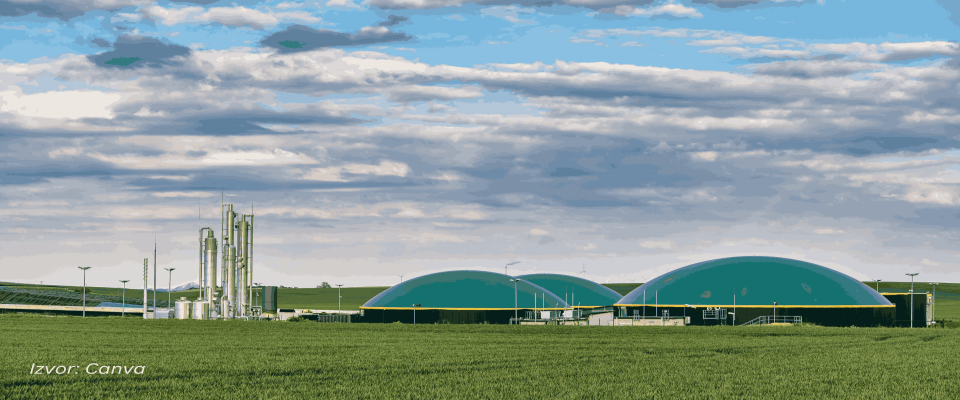
Another important application of Jenbacher technology is energy generation from biogas and alternative gaseous fuels.
Biogas can be produced through the anaerobic digestion of organic materials, including residues from food processing, agriculture and wastewater treatment.
Instead of treating these materials solely as waste, companies can explore opportunities to convert them into useful electricity and heat.
Jenbacher engines are used internationally in biogas plants, wastewater treatment facilities, landfill gas applications and other projects where available gaseous fuels can be converted into energy.
For Serbia, with its significant agricultural and food-processing sectors, this is a particularly relevant opportunity.
Industrial companies generating organic by-products or operating wastewater treatment facilities may consider energy models in which part of their electricity and heat demand is met through locally available resources.
The feasibility of such projects depends on feedstock quantities and composition, biogas production stability, electricity and heat requirements, and the management of residual materials.
Gas Engines, Solar Power and Battery Storage – How Can They Work Together?
Industrial energy systems are becoming increasingly complex.
More companies are considering investments in on-site solar power plants, battery energy storage systems (BESS) and advanced energy management solutions.
Solar PV can reduce electricity purchases from the grid, but generation depends on solar irradiation and weather conditions.
Battery storage can help manage short-term energy surpluses and deficits, shift electricity consumption across different periods and, in suitable configurations, reduce peak demand.
Gas engines can complement these technologies by providing dispatchable electricity generation when solar output is insufficient or additional operational flexibility is required.
Particularly interesting are systems in which a gas engine simultaneously supplies electricity and useful heat, while solar PV and battery storage contribute to optimizing the facility's electricity balance.
However, combining these technologies does not automatically guarantee the most cost-effective solution.
Their operation must be coordinated with production requirements, energy prices and technical grid connection conditions.
The future of industrial energy is therefore not about relying on a single technology, but about integrating different solutions into an efficient, reliable and economically viable system.
Industrial Electrification and On-Site Energy Generation – Two Complementary Approaches
The industrial energy transition is frequently discussed in terms of electrification, but this concept does not encompass every transformation taking place in industrial energy systems.
Electrification refers to replacing processes traditionally powered by fossil fuels with technologies that use electricity.
Large-scale industrial heat pumps are one example, enabling facilities to use electricity and available waste heat to meet certain heating and process heat requirements.
Gas engines and gas turbines, on the other hand, provide on-site, dispatchable electricity generation, often combined with useful heat production.
These technologies can play complementary roles within an industrial energy system.
For manufacturers planning energy infrastructure upgrades, it is important to assess both electrification opportunities and more efficient on-site generation, considering their effects on operating costs, emissions and energy security.
SEE ENERGY 2026: THE ELECTRIC FACTORY – Choosing the Right Energy System for Industry
These challenges will be at the center of the panel:
THE ELECTRIC FACTORY – HOW CAN INDUSTRY COMBINE GAS ENGINES, TURBINES AND HEAT PUMPS?
The discussion will bring together representatives of INNIO Jenbacher, Siemens Energy, Wärtsilä and LG Electronics, representing different technological approaches to electricity generation, combined heat and power, industrial heat pumps and waste heat recovery.
INNIO will be represented by Teki Suajibi, contributing expertise in gas engines, CHP applications and flexible on-site power generation.
The panel will focus on practical questions facing industrial companies when planning energy investments:
-
When is a gas engine the optimal solution, and when should a factory consider a gas turbine or a large-scale heat pump?
-
How should the required electricity and thermal capacity be determined?
-
Under which operating conditions does CHP deliver the greatest benefits?
-
How can waste heat be recovered and primary energy consumption reduced?
-
How can dispatchable generation be integrated with solar PV and battery storage?
-
How can industrial facilities improve energy security while maintaining control over operating costs?
-
Which technical and economic factors have the greatest impact on investment feasibility?
The objective is to help industrial companies understand the capabilities of different technologies and how they can be combined to meet actual production and energy requirements.
SEE ENERGY 2026 – Putting Industry at the Center of the Energy Transition
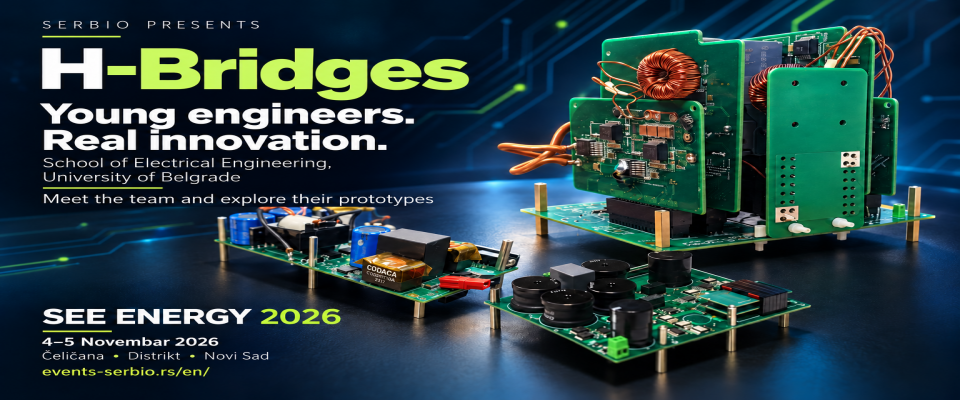
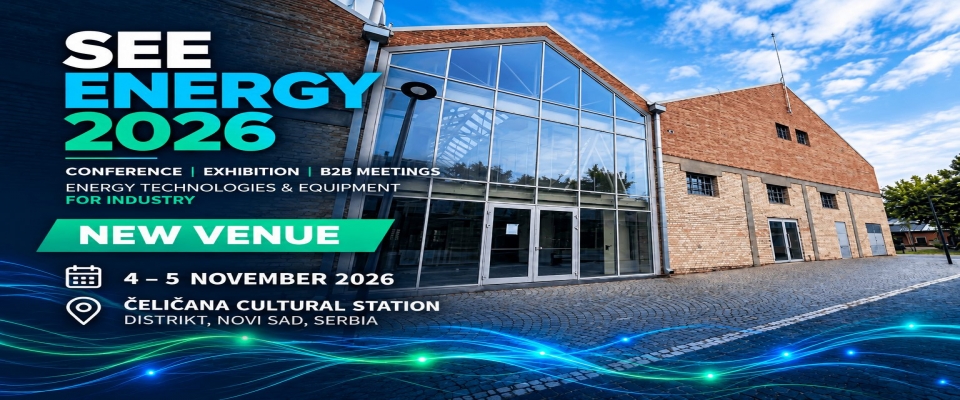
The seventh edition of SEE ENERGY 2026 – ENERGY FOR INDUSTRY, organized by the National Biomass Association SERBIO, will take place on 4–5 November 2026 at the Čeličana Cultural Station, in the District area of Novi Sad, Serbia.
The international conference and energy technology exhibition will bring together industrial companies, energy technology providers, investors, project developers, engineering companies, grid operators and financial institutions.
This year's program addresses a central question: how can industry secure more affordable, reliable and cleaner energy in the coming years through on-site generation, energy efficiency, renewable energy integration and appropriate financing models?
In addition to industrial electricity and heat generation, the conference will cover smart energy management, waste-to-energy solutions, solar PV, battery storage, active energy consumers and financing industrial energy investments.
The event will also feature an energy technology exhibition and organized B2B meetings, connecting industrial energy needs with technology providers and potential investment partners.
INNIO Jenbacher's participation will bring valuable expertise to the discussion on how industrial companies can develop more reliable, flexible and efficient energy systems tailored to their production requirements.
SEE ENERGY 2026 – ENERGY FOR INDUSTRY
4–5 November 2026 | Čeličana Cultural Station, District, Novi Sad, Serbia
International Conference | Energy Technology Exhibition | B2B Meetings
Information and registration: https://events-serbio.rs/