

Serbio
From Waste to Energy: Elixir Group Presents the Eco Energy Waste-to-Energy Plant in Prahovo at SEE ENERGY 2026
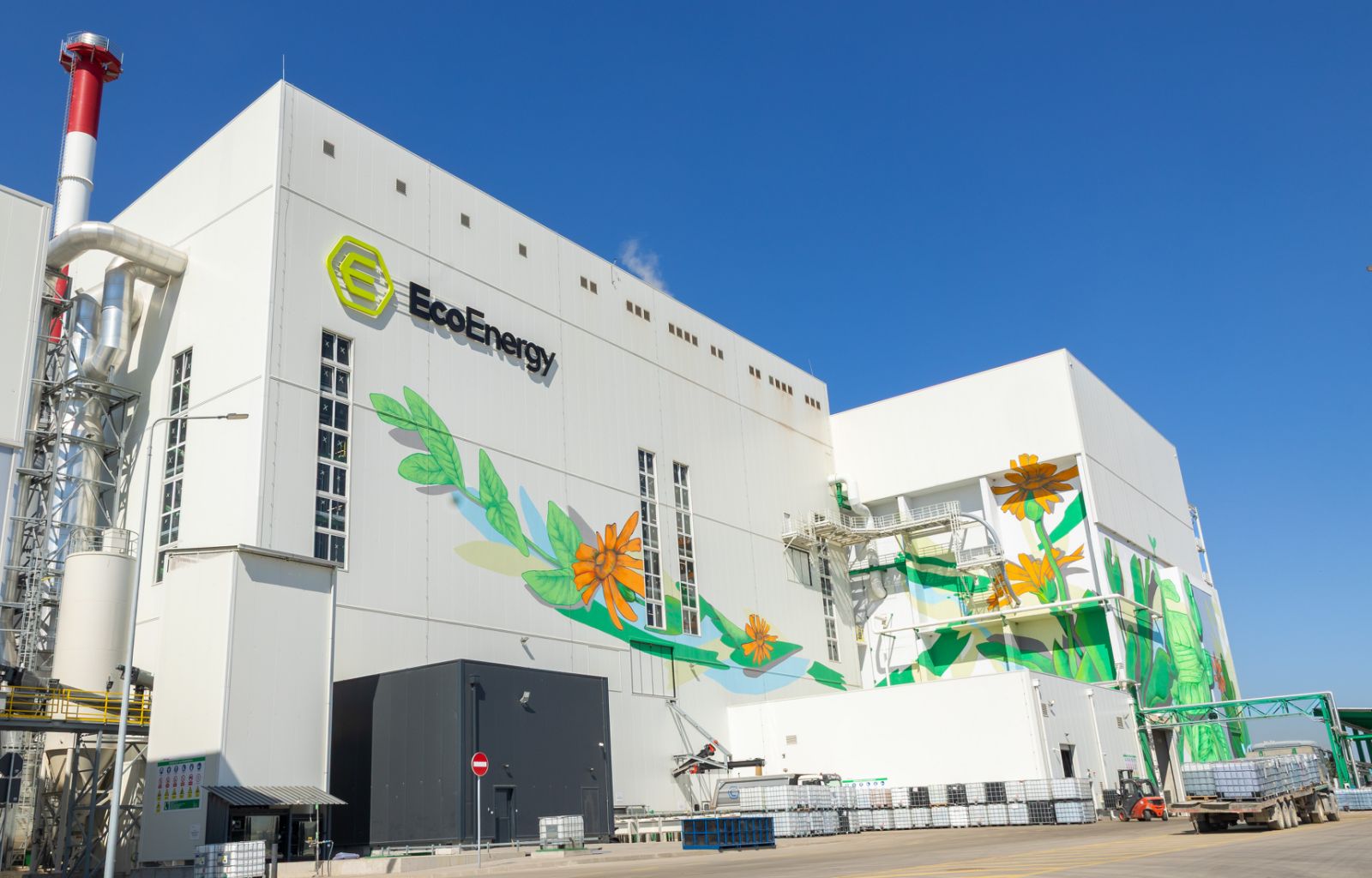
From Waste to Energy: Elixir Group Presents the Eco Energy Waste-to-Energy Plant in Prahovo at SEE ENERGY 2026
One of Elixir Group’s most significant new projects, the Eco Energy waste-to-energy plant in Prahovo, has begun operations. Designed to produce 35 tonnes of low-pressure steam per hour, with a total boiler thermal capacity of 30 MW, the plant will be one of the practical industrial projects featured at SEE ENERGY 2026 on 4–5 November in Novi Sad.
How can energy-intensive industries reduce their dependence on fossil fuels, improve energy security and recover value from waste that can no longer be recycled? One practical answer comes from Elixir Group, which has commissioned the Eco Energy waste-to-energy plant as part of a broader energy transformation of its industrial complex.
As a partner of SEE ENERGY 2026, Elixir Group brings together industrial energy, waste management, the circular economy and production decarbonisation through this project.
100,000 tonnes of waste per year – 30 MW of thermal capacity
The Eco Energy plant is designed for the thermal treatment and energy recovery of up to 100,000 tonnes of non-recyclable waste annually, with a thermal capacity of 30 MW.
The heat recovered from waste is used to produce 35 tonnes of low-pressure steam per hour, intended for direct use in production processes at the Elixir Prahovo industrial complex. In this way, energy recovered from waste becomes part of the factory’s internal energy system, replacing a portion of the energy generated from fossil fuels.
The plant uses fluidised-bed waste treatment technology. According to Elixir Group, the technological solution complies with European requirements and best available techniques for the thermal treatment of waste and energy recovery.
Eco Energy as part of industrial decarbonisation
The project’s significance extends beyond waste management. For Elixir Group, Eco Energy forms part of a broader strategy focused on energy security, diversification of energy sources, more efficient resource use and a lower carbon footprint for production.
According to company data, using energy recovered from non-recyclable waste is expected to reduce fossil fuel consumption and has the potential to deliver a further 26% reduction in the carbon footprint per tonne of phosphoric acid produced.
At the same time, the project applies circular economy principles: waste that can no longer be reused or recycled gains new value through energy recovery and the generation of energy for industrial use, rather than being sent to landfill.
Operational experience from the plant
The Eco Energy waste-to-energy plant is part of a major investment programme to develop the Prahovo site and modernise Elixir Group’s industrial complex.
Its operation provides a basis for sharing practical experience in applying waste-to-energy technology in industry, from integration with existing production processes to its contribution to energy security and reduced fossil fuel use.
These experiences are particularly relevant to energy-intensive industries considering alternative energy sources and approaches to production decarbonisation.
Industrial practice in focus at SEE ENERGY 2026
How does waste become an energy source? How much can waste-to-energy contribute to reducing dependence on fossil fuels? And what does such a solution look like when integrated directly into a production process?
These questions will be explored through the practical example from Prahovo at SEE ENERGY 2026, taking place on 4–5 November at the Čeličana Cultural Station, Distrikt, Novi Sad.
Elixir Group’s participation brings one of the central themes of this year’s SEE ENERGY programme into focus: a concrete industrial project and experience gained through its implementation, providing a basis for discussing how industrial companies can connect energy security, more efficient resource use and decarbonisation goals.
Find out more at SEE ENERGY 2026
4–5 November 2026 | Čeličana, Distrikt, Novi Sad, Serbia
Regional Conference & Expo for Energy Technologies
H-Bridges at SEE ENERGY 2026: Young Engineers Showcase Energy Innovations
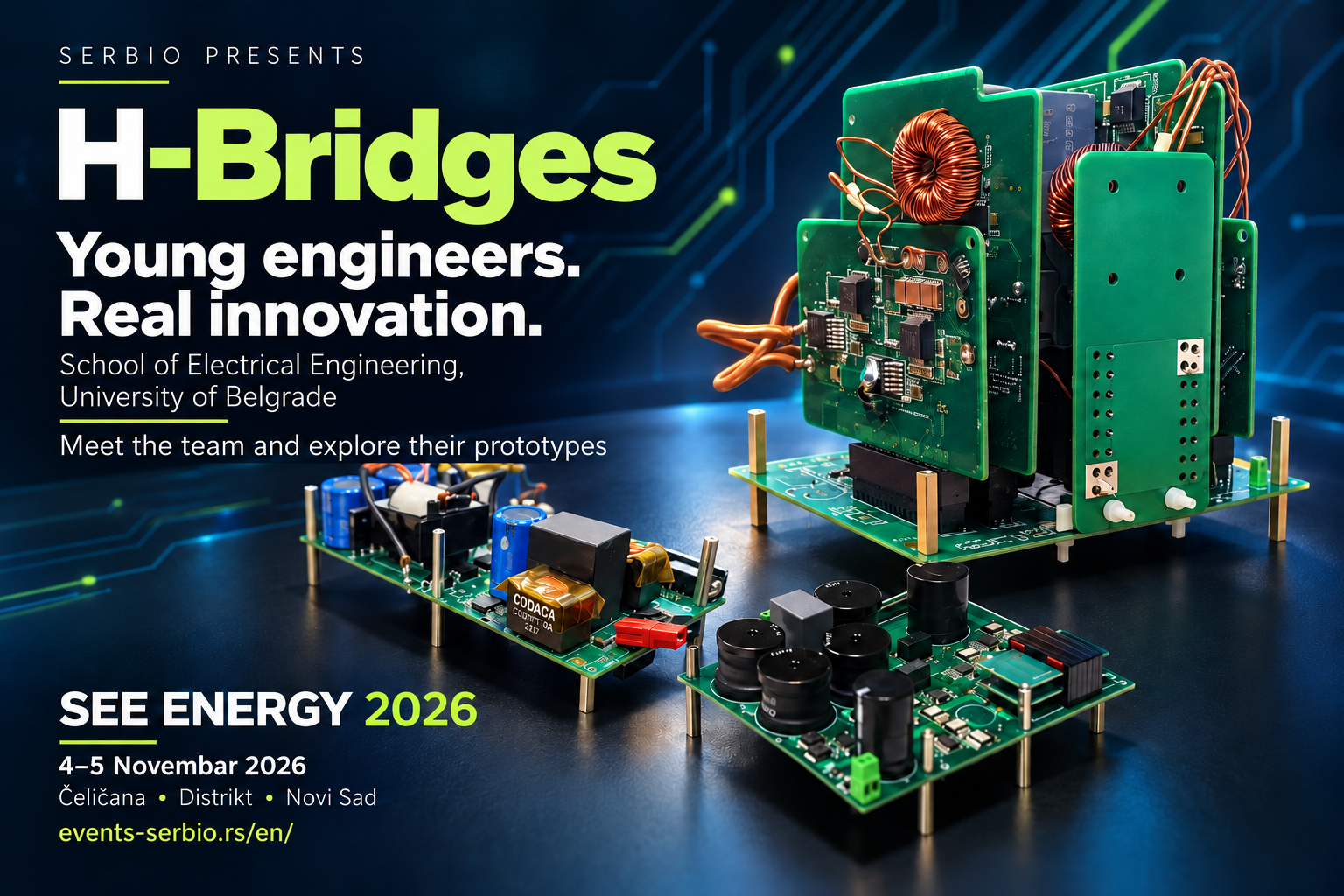
Young Engineers from the University of Belgrade Bring Innovation to SEE ENERGY 2026: H-Bridges Showcases Tomorrow’s Technologies
How can we ensure a stable and efficient electricity supply from different energy sources? H-Bridges, the award-winning student team from the University of Belgrade’s School of Electrical Engineering, is working on an answer. The team will present its work and current project at the SEE ENERGY 2026 international conference and exhibition, taking place on 4–5 November in Novi Sad, Serbia.
Hosted at the Čeličana Cultural Station in Novi Sad’s Distrikt, SEE ENERGY 2026 will bring together leading companies, experts and industry representatives to explore practical solutions for a more secure, efficient and cost-effective energy supply.
Among the participants will be H-Bridges, a student team from the University of Belgrade’s School of Electrical Engineering, demonstrating how academic knowledge, innovation and hands-on engineering can address real challenges in the energy sector.
From a university laboratory to international competitions
H-Bridges was established within the Digital Drive Control Laboratory at the School of Electrical Engineering in Belgrade. The team brings together students from different fields to develop hardware and software solutions in power electronics, electric drives and energy system control.
Under the mentorship of Dr Aleksandar Milić, team members take part in the entire development process: from concept and design to prototype construction and testing, project management, fundraising and presenting their results to an international engineering audience.
Their achievements have been recognised at the IEEE International Future Energy Challenge (IFEC), a global university competition bringing together outstanding student engineering teams from around the world.
H-Bridges has achieved notable international results, including first place in 2019 and second place in 2020, 2022 and 2023.
A particular highlight was the team’s 2019 victory with an electric bicycle drive system and accompanying application. Their solution passed all 15 technical tests on the first attempt and achieved an efficiency of 98.7% at maximum load.
A Universal Power Processing Unit for more flexible energy systems
The H-Bridges team’s current project for 2027 focuses on developing a Universal Power Processing Unit.
The concept aims to enable more flexible use of electricity and a stable power supply to consumers from different sources.
In the first phase, the students are developing a solution for reliable electricity supply in rural areas, even when the characteristics of the available power sources are not known in advance.
The design places particular emphasis on compact size, reliability, power quality and high energy efficiency.
The next phase will explore modularity and opportunities to scale up the system, opening the way for potential applications in electricity distribution networks.
Such research is increasingly relevant as power systems become more complex. Integrating renewable energy sources, battery storage and different types of consumers requires advanced power electronics and control solutions.
SEE ENERGY 2026: Connecting industry, technology and the next generation of engineers
H-Bridges’ participation in SEE ENERGY 2026 offers an opportunity to introduce the work of young Serbian engineers to companies developing and implementing modern energy technologies.
The conference will bring together representatives of companies including Huawei Digital Power, SKE Engineering, Sungrow, ABB, LG Electronics and Siemens Energy, alongside other participants working in industrial energy, automation, battery systems and electricity management.
For H-Bridges, the event provides a platform to exchange experience, meet potential technology partners and present student research to an expert audience.
For companies and industry representatives, it is an opportunity to meet a new generation of engineers already tackling practical technological challenges during their studies.
Connecting industry and academia is an essential part of energy sector development. Through SEE ENERGY 2026, SERBIO supports collaboration between companies developing today’s market and young engineers who will help shape its future.
Meet the H-Bridges team and explore their prototypes on both days of the exhibition.
SEE ENERGY 2026 – International Energy Conference & Exhibition
4–5 November 2026
Čeličana Cultural Station, Distrikt, Novi Sad, Serbia
Conference programme and participation information: events-serbio.rs/en/
More about H-Bridges: h-bridges.etf.bg.ac.rs
One Million Tonnes of Waste Converted into Energy in Vinča
One Million Tonnes of Waste Converted into Energy at the Vinča Waste Management Centre
Beo Čista Energija, the City of Belgrade’s private partner in the public-private partnership project for waste management, is pleased to announce that one million tonnes of municipal waste have been used to generate electricity and heat at the Vinča Waste Management Centre.
From August 2021 to August 2026, the Centre received more than three million tonnes of non-hazardous municipal waste. Of this amount, one million tonnes were diverted from landfill disposal and thermally treated at the waste-to-energy facility, generating 455,213 MWh of electricity and 293,172 MWh of heat.
This milestone was achieved while maintaining high environmental protection standards. Emissions from the waste-to-energy facility are monitored 24 hours a day through an automated Continuous Emissions Monitoring System (CEMS). Beo Čista Energija publishes its emissions monitoring results on its website to ensure public access to this information: https://www.bcenergy.rs/rs/emisije/
“The first million tonnes of thermally treated waste represents a fundamental change in the way Belgrade manages its waste – moving from landfill disposal towards using waste as a resource,” said Vladimir Milovanović, Director of Beo Čista Energija. “This is the result of many years of cooperation between the City of Belgrade, our partners and the institutions that have supported this project from the very beginning.”
The facility is a central component of the public-private partnership between the City of Belgrade and Beo Čista Energija, a company established by ITOCHU Corporation (Japan), Veolia (France) and Marguerite, a pan-European infrastructure fund (Luxembourg).
The first million tonnes of waste thermally treated in Vinča represents one of the tangible achievements of this partnership – and a shared success for everyone involved in the project. This milestone reflects the commitment and cooperation of the many stakeholders who have contributed to developing a modern and sustainable waste management system in Belgrade.
Vladimir Milovanović, Director of Beo Čista Energija, will also participate in the conference programme of SEE ENERGY 2026, taking place on 4–5 November 2026 at Čeličana, Distrikt, Novi Sad, Serbia. He will share practical experience and results from the Vinča waste-to-energy project with energy and industry professionals.
More information about the conference: https://events-serbio.rs/en/
Sungrow at SEE ENERGY 2026: How Battery Storage and Solar Energy Are Transforming the Future of Industry
Sungrow at SEE ENERGY 2026: How Battery Storage and Solar Energy Are Transforming the Future of Industry
Sungrow, one of the world's leading companies in solar inverter and energy storage technologies, will participate in the international conference and exhibition SEE ENERGY 2026, taking place on 4–5 November at the Čeličana Cultural Station in Novi Sad's District, Serbia.
How can industrial companies make greater use of their own energy, reduce exposure to fluctuating electricity prices and ensure a more reliable power supply? Increasingly, the answers lie in combining solar power plants, battery energy storage systems (BESS) and advanced energy management technologies.
These are precisely the areas in which Sungrow develops technologies deployed in energy projects around the world.
With more than 29 years of experience, the company had installed over 1,000 GW of power electronic converters worldwide by the end of 2025. Its portfolio includes solar inverters, battery energy storage systems and technologies for integrating renewable energy sources into power systems.
From Solar Power Plants to Flexible Energy Systems
For industrial companies, battery energy storage is becoming an increasingly important consideration in energy investment planning.
When combined with solar power generation, BESS can help increase self-consumption of locally generated electricity, manage peak demand and provide greater flexibility in energy use.
Sungrow develops solutions for commercial and industrial customers as well as large-scale energy projects. Its technologies are deployed in battery storage projects across Europe, including facilities in the United Kingdom, Belgium and Sweden.
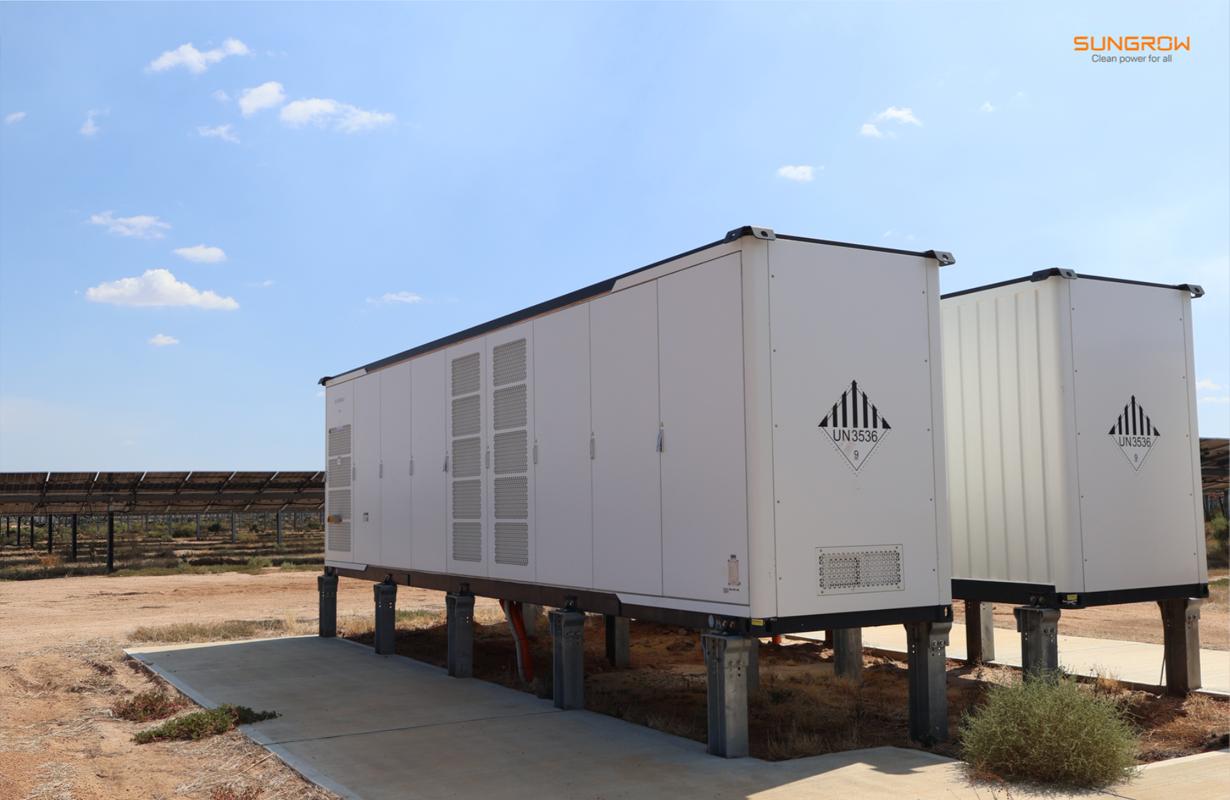
Sungrow in the SEE ENERGY 2026 EXPO Zone
Visitors to SEE ENERGY 2026 will have the opportunity to meet Sungrow representatives in the exhibition area and discuss the potential applications of solar and battery storage technologies in industrial and energy projects.
This year's SEE ENERGY, under the theme ENERGY FOR INDUSTRY, will bring together industrial companies, investors, project developers, power sector representatives, technology providers and financial institutions.
The conference program will place particular emphasis on hybrid energy systems, the integration of solar PV, battery storage and the grid, smart energy management, active energy consumers and financing energy investments.
Through its conference program, technology exhibition and organized B2B meetings, SEE ENERGY 2026 connects technology providers with industrial companies seeking practical solutions for more reliable, cost-effective and sustainable energy supply.
SEE ENERGY 2026 – ENERGY FOR INDUSTRY
4–5 November 2026 Čeličana Cultural Station, District, Novi Sad, Serbia
More information: www.events-serbio.rs
About Sungrow
Sungrow is a global company specializing in renewable energy technologies. According to the company, as of December 2025, it had installed more than 1,000 GW of power electronic converters worldwide, supported by a service network spanning 520 locations.
BloombergNEF has recognized Sungrow among the leading companies in terms of bankability in solar inverter and energy storage technologies.
INNIO Jenbacher at SEE ENERGY 2026: Energy for Industry
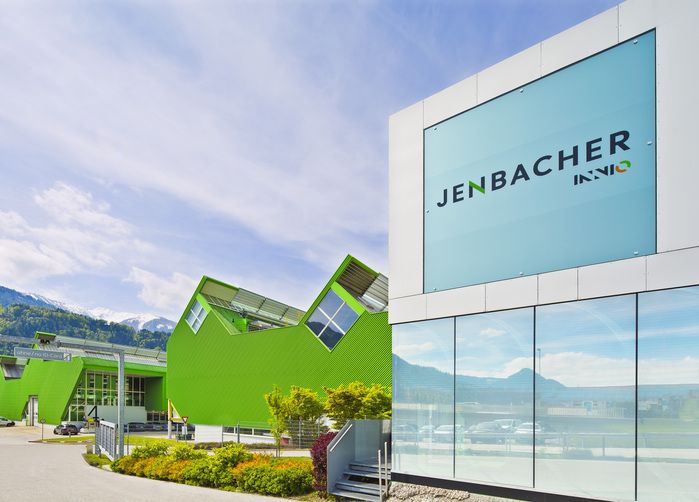
How Can Factories Generate Their Own Electricity and Heat? INNIO Jenbacher at SEE ENERGY 2026
Gas engines, combined heat and power (CHP), large-scale heat pumps and gas turbines are becoming increasingly important for industrial companies seeking greater energy security and better control over operating costs. How can manufacturers identify the right combination of technologies, and when does on-site energy generation make economic sense? These questions will be explored by INNIO Group, the company behind Jenbacher gas engines, at SEE ENERGY 2026 – ENERGY FOR INDUSTRY, taking place on 4–5 November in Novi Sad, Serbia.
When Factories Become Energy Producers
For industrial companies, energy is no longer simply an operating expense. Electricity and gas prices, supply reliability and the need to reduce emissions increasingly influence competitiveness, production planning and long-term investment decisions.
As a result, manufacturers are exploring solutions that enable them to generate electricity and heat directly at their facilities or use available energy resources more efficiently.
These technologies include gas engines, gas turbines, combined heat and power (CHP) systems, large-scale industrial heat pumps and waste heat recovery solutions.
Each technology serves a different purpose.
Gas engines and turbines provide dispatchable electricity generation, often combined with useful heat production. Large-scale heat pumps enable the electrification of certain industrial heating processes, while waste heat recovery systems reduce the need for additional energy generation.
The key question for industry is therefore not which technology is best in isolation, but which combination delivers the greatest value for a specific industrial facility.
INNIO Jenbacher – Decentralized Energy Solutions for Industry
INNIO Group is a global provider of decentralized energy solutions, headquartered in Munich, Germany, with more than 5,000 employees and a presence in approximately 100 countries.
The company designs, manufactures and services high-performance energy systems under its Jenbacher and Waukesha brands, serving industrial facilities, microgrids, data centers, grid stabilization applications and other sectors requiring reliable and flexible power generation.
Jenbacher gas engines are used for electricity generation and combined heat and power applications, where heat recovered from engine operation can be utilized in industrial processes, heating systems or hot water production.
The Jenbacher portfolio covers a broad range of power outputs, from approximately 250 kW to more than 10 MW per unit, making the technology suitable for different industrial and energy applications.
One of the key advantages of Jenbacher technology is its ability to operate on various gaseous fuels, including natural gas, biogas, biomethane and certain industrial gases.
INNIO also develops hydrogen-capable solutions, depending on the engine type and technical configuration.
Beyond equipment supply, the company provides maintenance, modernization and digital monitoring services designed to support reliable operation throughout the equipment lifecycle.
For industrial customers, this means evaluating energy investments not only in terms of equipment acquisition costs, but also long-term reliability, availability and total energy production costs.
Combined Heat and Power: Producing Electricity and Heat from One Fuel Source
For industrial facilities with simultaneous electricity and heating requirements, combined heat and power can offer significant advantages.
Instead of purchasing electricity from the grid while producing heat separately in a boiler plant, CHP systems enable both forms of energy to be generated within a single integrated system.
A gas engine drives a generator to produce electricity, while heat from the exhaust gases and engine cooling systems is recovered for useful applications.
Depending on the system configuration and the ability to utilize recovered heat, overall CHP efficiency can reach approximately 90%.
This approach can be particularly relevant for food processing, chemical, pharmaceutical and other industries with continuous electricity and thermal energy requirements.
However, CHP is not a universal solution for every industrial facility.
Its economic feasibility depends on electricity and fuel prices, annual operating hours, thermal demand, investment costs and the ability to utilize the generated energy efficiently.
Selecting the right technology therefore requires a detailed analysis of the facility's actual consumption profile rather than a simple comparison of installed equipment capacities.
Biogas and Industrial By-products as Energy Resources
Another important application of Jenbacher technology is energy generation from biogas and alternative gaseous fuels.
Biogas can be produced through the anaerobic digestion of organic materials, including residues from food processing, agriculture and wastewater treatment.
Instead of treating these materials solely as waste, companies can explore opportunities to convert them into useful electricity and heat.
Jenbacher engines are used internationally in biogas plants, wastewater treatment facilities, landfill gas applications and other projects where available gaseous fuels can be converted into energy.
For Serbia, with its significant agricultural and food-processing sectors, this is a particularly relevant opportunity.
Industrial companies generating organic by-products or operating wastewater treatment facilities may consider energy models in which part of their electricity and heat demand is met through locally available resources.
The feasibility of such projects depends on feedstock quantities and composition, biogas production stability, electricity and heat requirements, and the management of residual materials.
Gas Engines, Solar Power and Battery Storage – How Can They Work Together?
Industrial energy systems are becoming increasingly complex.
More companies are considering investments in on-site solar power plants, battery energy storage systems (BESS) and advanced energy management solutions.
Solar PV can reduce electricity purchases from the grid, but generation depends on solar irradiation and weather conditions.
Battery storage can help manage short-term energy surpluses and deficits, shift electricity consumption across different periods and, in suitable configurations, reduce peak demand.
Gas engines can complement these technologies by providing dispatchable electricity generation when solar output is insufficient or additional operational flexibility is required.
Particularly interesting are systems in which a gas engine simultaneously supplies electricity and useful heat, while solar PV and battery storage contribute to optimizing the facility's electricity balance.
However, combining these technologies does not automatically guarantee the most cost-effective solution.
Their operation must be coordinated with production requirements, energy prices and technical grid connection conditions.
The future of industrial energy is therefore not about relying on a single technology, but about integrating different solutions into an efficient, reliable and economically viable system.
Industrial Electrification and On-Site Energy Generation – Two Complementary Approaches
The industrial energy transition is frequently discussed in terms of electrification, but this concept does not encompass every transformation taking place in industrial energy systems.
Electrification refers to replacing processes traditionally powered by fossil fuels with technologies that use electricity.
Large-scale industrial heat pumps are one example, enabling facilities to use electricity and available waste heat to meet certain heating and process heat requirements.
Gas engines and gas turbines, on the other hand, provide on-site, dispatchable electricity generation, often combined with useful heat production.
These technologies can play complementary roles within an industrial energy system.
For manufacturers planning energy infrastructure upgrades, it is important to assess both electrification opportunities and more efficient on-site generation, considering their effects on operating costs, emissions and energy security.
SEE ENERGY 2026: THE ELECTRIC FACTORY – Choosing the Right Energy System for Industry
These challenges will be at the center of the panel:
THE ELECTRIC FACTORY – HOW CAN INDUSTRY COMBINE GAS ENGINES, TURBINES AND HEAT PUMPS?
The discussion will bring together representatives of INNIO Jenbacher, Siemens Energy, Wärtsilä and LG Electronics, representing different technological approaches to electricity generation, combined heat and power, industrial heat pumps and waste heat recovery.
INNIO will be represented by Teki Suajibi, contributing expertise in gas engines, CHP applications and flexible on-site power generation.
The panel will focus on practical questions facing industrial companies when planning energy investments:
-
When is a gas engine the optimal solution, and when should a factory consider a gas turbine or a large-scale heat pump?
-
How should the required electricity and thermal capacity be determined?
-
Under which operating conditions does CHP deliver the greatest benefits?
-
How can waste heat be recovered and primary energy consumption reduced?
-
How can dispatchable generation be integrated with solar PV and battery storage?
-
How can industrial facilities improve energy security while maintaining control over operating costs?
-
Which technical and economic factors have the greatest impact on investment feasibility?
The objective is to help industrial companies understand the capabilities of different technologies and how they can be combined to meet actual production and energy requirements.
SEE ENERGY 2026 – Putting Industry at the Center of the Energy Transition
The seventh edition of SEE ENERGY 2026 – ENERGY FOR INDUSTRY, organized by the National Biomass Association SERBIO, will take place on 4–5 November 2026 at the Čeličana Cultural Station, in the District area of Novi Sad, Serbia.
The international conference and energy technology exhibition will bring together industrial companies, energy technology providers, investors, project developers, engineering companies, grid operators and financial institutions.
This year's program addresses a central question: how can industry secure more affordable, reliable and cleaner energy in the coming years through on-site generation, energy efficiency, renewable energy integration and appropriate financing models?
In addition to industrial electricity and heat generation, the conference will cover smart energy management, waste-to-energy solutions, solar PV, battery storage, active energy consumers and financing industrial energy investments.
The event will also feature an energy technology exhibition and organized B2B meetings, connecting industrial energy needs with technology providers and potential investment partners.
INNIO Jenbacher's participation will bring valuable expertise to the discussion on how industrial companies can develop more reliable, flexible and efficient energy systems tailored to their production requirements.
SEE ENERGY 2026 – ENERGY FOR INDUSTRY
4–5 November 2026 | Čeličana Cultural Station, District, Novi Sad, Serbia
International Conference | Energy Technology Exhibition | B2B Meetings
Information and registration: https://events-serbio.rs/
LG Electronics at SEE ENERGY 2026: Can Waste Heat Become a New Energy Source for Cities?
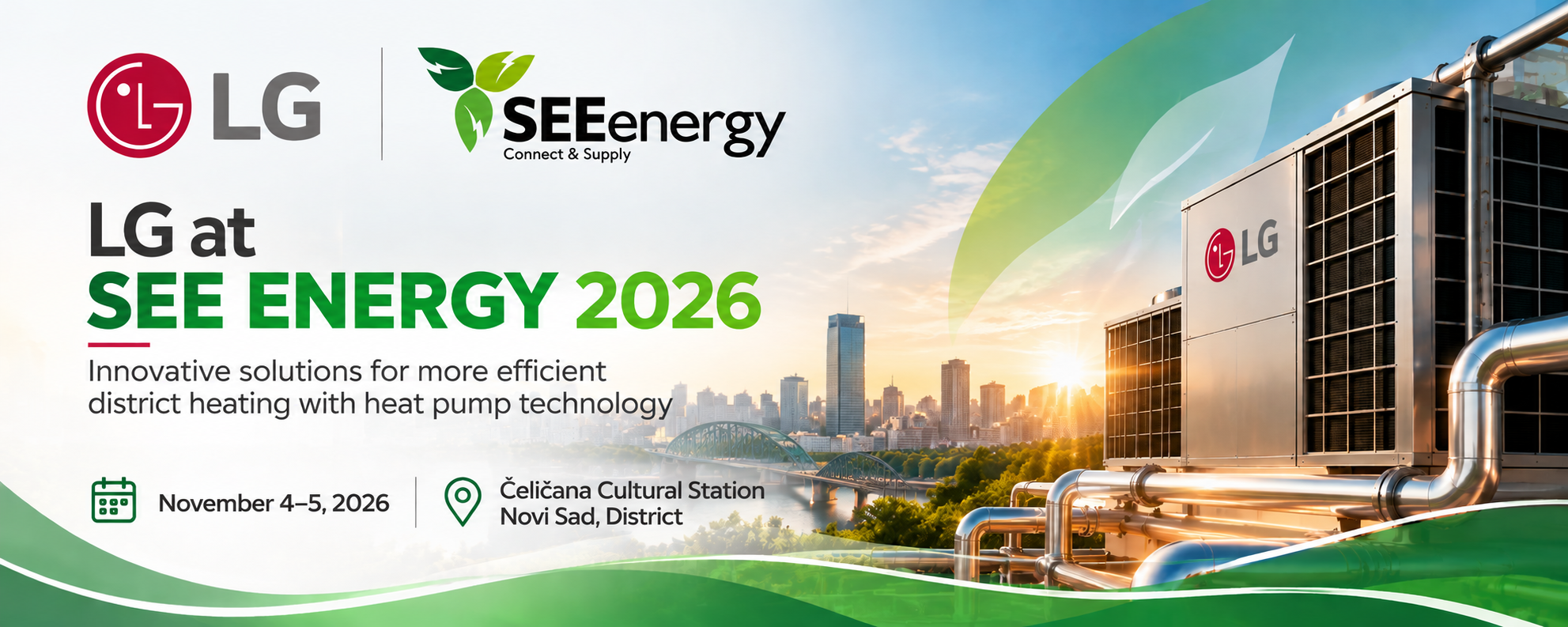
LG Electronics at SEE ENERGY 2026: Can Waste Heat Become a New Energy Source for Cities?
Illustration: LG Electronics at SEE ENERGY 2026 | Visual: SERBIO
Energy released daily into the environment by industrial facilities, data centres and cooling systems could become a valuable resource for heating cities. How can large-scale heat pumps transform this untapped energy into useful heat? What lessons can be learned from European experience, and where could these solutions be implemented in Serbia? These are among the key questions LG Electronics will address at SEE ENERGY 2026, taking place on 4–5 November 2026 at Čeličana Cultural Station in Novi Sad's District.
While much of the discussion surrounding the energy transition focuses on developing new solar and wind power plants, energy storage and reducing CO₂ emissions, one significant energy resource often remains overlooked – heat that is already generated by industry but goes unused.
Industrial production processes, cooling systems, data centres and numerous commercial facilities continuously release thermal energy. In many cases, this heat is discharged into the environment, although, with appropriate technology and infrastructure, it could be recovered and used to heat water, buildings or even entire district heating networks.
This is why large-scale heat pumps and waste heat recovery systems are becoming increasingly important in the development of modern energy infrastructure.
From Industrial Waste Heat to Heating Cities
Unlike conventional systems that generate heat by burning fuels, heat pumps use electricity to extract heat from lower-temperature sources and raise it to a temperature suitable for end users. This means that energy which would otherwise be lost can be reintegrated into the energy system.
Potential heat sources include industrial cooling systems, manufacturing processes, data centres, wastewater and other sources of low-temperature thermal energy.
One particularly promising opportunity is connecting industrial and commercial facilities to district heating networks. Under this model, excess heat from one facility can become an energy source for other consumers.
However, successful implementation depends on several factors, including the temperature and continuous availability of the heat source, its distance from consumers, the requirements of the district heating network, electricity prices and overall project economics.
The question is therefore no longer simply whether waste heat can be recovered, but where its application is technically feasible, economically viable and sustainable in the long term.
LG Electronics: Technologies Connecting Energy Efficiency and Decarbonisation
At SEE ENERGY 2026 – ENERGY FOR INDUSTRY, taking place on 4–5 November 2026 at Čeličana Cultural Station in Novi Sad's District, LG Electronics will present approaches to implementing these technologies, with particular emphasis on their role in modernising district heating systems.
The topic will be presented by Hanbeom Nam (Daniel Nam), Director for Sales Engineering in LGE Central EU countries, LG Electronics.
The discussion will focus on the application of large-scale heat pumps, the integration of different heat sources and technological solutions that can contribute to reducing fossil fuel consumption.
Particular attention will be given to European experience, including examples from Poland, where approaches to modernising district heating infrastructure are being explored and developed.
Such experience is also relevant to markets like Serbia, which have established district heating networks, significant industrial energy consumers and a growing need to improve energy efficiency.
What Does This Mean for Industry and District Heating Operators in Serbia?
The application of large-scale heat pumps raises several important questions for Serbia's energy sector.
For industrial companies, waste heat recovery can offer an opportunity to make better use of energy already paid for through production processes, while reducing overall energy losses.
For district heating operators, integrating new heat sources can contribute to a more diversified energy supply and reduce dependence on a single fuel, provided that the technical characteristics of existing networks allow such integration.
For cities and local authorities, these projects create opportunities to develop energy infrastructure that connects industry, municipal systems and local energy resources.
However, technology is only one part of the solution. Financing, contractual arrangements between heat producers and consumers, year-round availability of heat sources and compatibility with existing infrastructure are equally important.
This is why dialogue between technology providers, industrial consumers, district heating operators, investors and financial institutions is essential to transforming technological potential into concrete projects.
SEE ENERGY 2026: From Technology to Investment Decisions
LG Electronics' participation forms part of the broader programme of SEE ENERGY 2026 – ENERGY FOR INDUSTRY, which places industry at the centre of discussions about the future of energy.
Expert panels will explore solutions for on-site energy generation and management, including gas engines and cogeneration, large-scale heat pumps, smart energy management, solar power plants, battery energy storage systems, waste valorisation and financing energy investments.
The central question of the conference is: How can industry secure more affordable, reliable and cleaner energy over the next three to five years – and how can the necessary investments be financed?
In addition to the conference programme, SEE ENERGY 2026 will feature an exhibition of energy technologies and organised B2B meetings, designed to connect companies with specific energy needs to technology suppliers, engineering companies, investors and financial partners.
The seventh edition of the international SEE ENERGY 2026 conference will take place on 4–5 November 2026 at Čeličana Cultural Station in Novi Sad's District, organised by the National Biomass Association SERBIO.
More information, programme and registration: https://events-serbio.rs/
H2 Conference 2026: Green Hydrogen as a Roadmap for Energy Transition

Green Hydrogen and Serbia’s Energy Transition: Belgrade to Host the International H2 Conference 2026
Belgrade, 17–18 March 2026 – At a time when Europe’s energy transition is accelerating and the need for a stable, secure and sustainable energy system is becoming one of the key challenges of modern society, Belgrade will host the International H2 Conference 2026, one of the most important regional events dedicated to green hydrogen and the future of energy.
The conference will take place at the Hyatt Regency Belgrade and will bring together key stakeholders of the energy transition from Serbia, the region and across Europe.
An International Platform for Energy Policy, Industry and Investment
The International H2 Conference 2026 – Green Hydrogen as a Roadmap for Energy Transition is organized by the Hydrogen Projects Development Cluster (H2 Cluster) and the energy portal Energija Balkana.
The event is designed as a professional and business-oriented platform connecting power utilities and energy companies, industry and energy-intensive sectors, investors and financial institutions, regulators and policy makers, research organizations and international institutions.
The goal of the conference is to connect energy policy, technology and capital through dialogue based on real projects and implementable solutions.
Green Hydrogen as a Response to Power System Challenges
Over the past decade, Serbia has made significant progress in the development of renewable energy sources, particularly wind and solar power. However, the growth of renewables simultaneously raises questions related to power system stability, balancing electricity generation and consumption, and long-term energy storage.
The Role of Green Hydrogen in the Energy Transition
In this context, green hydrogen gains a strategic role as a technology that connects renewable energy sources with a flexible, resilient and reliable energy system, enabling the decarbonization of industry, transport and the energy sector.
Focus on Projects and Implementation, Not Only Strategies
H2 Conference 2026 places special emphasis on practical solutions and real-world projects, rather than focusing exclusively on strategic documents and long-term plans.
Key Conference Topics
Through high-level panel discussions, interviews with decision-makers and case studies, the conference will address the following topics:
-
how power utilities plan and implement the energy transition,
-
development of large-scale hydrogen projects and H₂ valleys,
-
infrastructure challenges related to hydrogen storage and transport,
-
achieving a competitive price for green hydrogen,
-
ways in which industry, investors and end users are already applying hydrogen in operational systems.
 H2 Conference 2025, Crowne Plaza Belgrade
Belgrade as a Regional Meeting Point for Future Energy Solutions
The participation of representatives of national power utilities, international institutions, industrial leaders and investors adds particular value to the conference. They will discuss how the energy transition is being implemented in practice – from planning and financing to construction and day-to-day operation of energy systems.
The conclusions of the conference will represent an important contribution to the development of the hydrogen ecosystem in Serbia, including the preparation of pilot projects, development of professional capacities, infrastructure planning, and alignment with European standards and initiatives.
H2 Conference 2026 – An Opportunity for Serbia to Actively Shape Its Energy Future
At a time when hydrogen is moving from the concept phase to real-world implementation, H2 Conference 2026 represents an opportunity for Serbia to actively participate in shaping a sustainable, flexible and technologically advanced energy system.
More information about the event is available at:
https://www.h2cluster.rs/
This email address is being protected from spambots. You need JavaScript enabled to view it.
The National Biomass Association – SERBIO provides institutional support to H2 Conference 2026 and actively participates in its organization, with the aim of strengthening dialogue between industry, the energy sector and policy makers, and promoting sustainable, domestic and systemic energy solutions.
Innovative Biomass Heating Solutions for a Sustainable Energy Future - HARGASSNER Serbia
 Innovative Biomass Heating Solutions for a Sustainable Energy Future
HARGASSNER Serbia is a proud partner of the SEE ENERGY 2025 – Connect & Supply conference. As one of the pioneers in the use of renewable energy sources in the form of biomass, HARGASSNER has been developing advanced technology and fully automated pellet and wood chip heating systems for more than four decades.
Since its founding in 1984, the company has continuously improved its systems, offering a wide range of solutions — from small residential applications to large industrial installations. HARGASSNER equipment is now present across Europe and worldwide, with more than 200,000 successful references confirming its technological excellence and reliability.
Operating in Serbia and the region since 2015, HARGASSNER has quickly positioned itself as a leader in the field of biomass heating. Numerous completed projects in hospitals, schools, kindergartens, hotels, farms, and district heating systems stand as proof of the company’s quality, efficiency, and long-term commitment to sustainable energy.
HARGASSNER – Partner of SEE ENERGY 2025 Conference
As a long-term partner of the SEE ENERGY conference, HARGASSNER continues to promote knowledge exchange and support the adoption of sustainable energy solutions. During the event, all registered participants will be able to connect with the company’s representatives through the B2B platform, exploring innovative approaches that improve energy efficiency and accelerate the energy transition across the region.
More about Hargassner - link.
Energy Net – 30 Years of Leadership in Energy Efficiency, Smart Building Systems and Sustainable Technologies

Energy Net, a long-standing regional leader and partner of SEE ENERGY 2025 – Connect & Supply, brings more than 30 years of experience in designing, implementing, and maintaining advanced systems for energy efficiency, heating, cooling, ventilation, and building automation. Headquartered in Novi Sad, Serbia, the company has grown into one of the most respected names in the region’s energy and building technology sector.
Guided by its mission to create a “better atmosphere in places where people spend time”, Energy Net integrates comfort, technology, and sustainability into every project. Its activities span green construction, sustainable mobility, interior design, and workspace solutions, as well as education, consulting, and human capital development programs aimed at advancing modern business practices and energy management culture.
The company’s focus on energy optimization and intelligent systems positions it at the forefront of the transition toward sustainable development. Through continuous innovation, Energy Net delivers solutions that reduce energy consumption, improve environmental performance, and enhance quality of life.
At the SEE ENERGY 2025 conference, Energy Net will showcase its expertise and present best practices demonstrating how smart systems and integrated technologies contribute to greater efficiency, sustainability, and competitiveness in both industrial and urban environments.
All registered conference participants will have the opportunity to schedule B2B meetings with Energy Net representatives through the online platform, to explore collaboration possibilities, exchange expertise, and discuss innovative energy efficiency solutions tailored to different sectors.
With its proven track record, professional team, and vision of a greener tomorrow, Energy Net continues to set benchmarks for innovation and excellence in the regional energy and building sectors.
Learn more at www.energynet.rs.
Resalta – Driving the Energy Transition Toward Renewable Heat in Industry and District Heating

Resalta, one of the key partners of the SEE ENERGY 2025 – Connect & Supply conference taking place on October 28–29 at the Master Center in Novi Sad, is leading the region’s transition toward clean, electrified heating systems in industry and district heating. As a leading energy services company in Central and Southeastern Europe and part of the international Aggreko Group, Resalta designs, finances, and operates advanced energy systems that integrate renewable energy sources and modern technologies – from solar power plants and high-temperature heat pumps to biomass, cogeneration, and thermal storage systems.
Through this approach, Resalta helps industries and cities reduce CO₂ emissions, increase energy efficiency, and achieve greater independence from fossil fuels. With more than 360 completed projects and over 140,000 tons of CO₂ emissions reduced annually, the company has become synonymous with innovation and sustainable energy solutions.
One of Resalta’s latest achievements is a 6 MW industrial solar plant in Serbia, marking an important milestone in further electrification of heat and the development of the power-to-heat concept in the region. This technology demonstrates how renewable heat and electricity can jointly contribute to decarbonization and modernization of the energy sector.
At SEE ENERGY 2025, Đorđe Popović, Resalta’s Regional Director for Serbia, will speak at the panel “POWER-TO-HEAT: The Path Toward Decarbonizing Industry and District Heating”, presenting practical examples of renewable heat applications and discussing how electrification is reshaping sustainability strategies for industries and cities alike.
With its projects and expertise, Resalta proves that the energy transition is not just a vision of the future—it is a reality being built every day through smart, sustainable, and cost-effective solutions.
All registered conference participants can schedule a B2B meeting with Resalta representatives to explore collaboration opportunities and learn more about concrete solutions for improving energy efficiency and reducing emissions within their systems.
Learn more about the company at www.resalta.rs.




Latest news
- From Waste to Energy: Elixir Group Presents the Eco Energy Waste-to-Energy Plant in Prahovo at SEE ENERGY 2026
- H-Bridges at SEE ENERGY 2026: Young Engineers Showcase Energy Innovations
- One Million Tonnes of Waste Converted into Energy in Vinča
- Sungrow at SEE ENERGY 2026: How Battery Storage and Solar Energy Are Transforming the Future of Industry
- LG Electronics at SEE ENERGY 2026: Can Waste Heat Become a New Energy Source for Cities?
- SEE ENERGY 2026 at Čeličana: Energy Conference in Novi Sad
- INNIO Jenbacher at SEE ENERGY 2026: Energy for Industry
- H2 Conference 2026: Green Hydrogen as a Roadmap for Energy Transition
- Innovative Biomass Heating Solutions for a Sustainable Energy Future - HARGASSNER Serbia
- Resalta – Driving the Energy Transition Toward Renewable Heat in Industry and District Heating
Contact
National Biomass Association SERBIO
Vladike Ćirića 2, 21 000, Novi Sad, Serbia
Phone: +381 62 179 0383
e-mail: This email address is being protected from spambots. You need JavaScript enabled to view it.

BioRES Project - Sustainable Regional Supply Chains for Woody Bioenergy has received funding from the European Union's Horizon 2020 research innovation programmer under grand agreement No 645994
The establishment of the National Biomass Association SERBIO was supported by:
